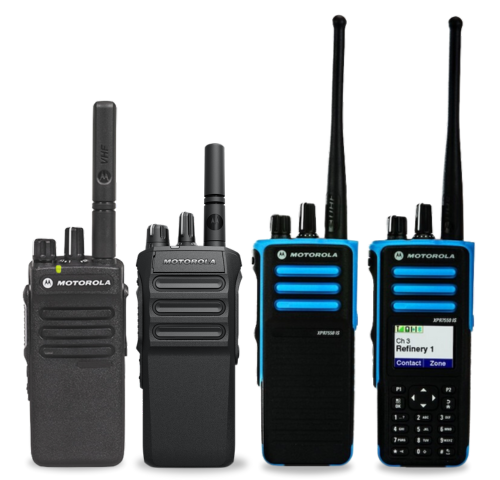


In today’s world where smartphones, messaging applications, and cloud technology are a normal part of life, you may be wondering if walkie talkies are still a useful and functional form of communication in today’s modern Malaysian society. On the face of it, these handheld radios seem like something out of the past within a world where pictures, videos, and location information are transmitted from one’s smartphone in a flash. Nevertheless, a comparison of walkie talkies and modern technology applied in practical settings in Malaysia reveals a different picture altogether.
Therefore, are walkie-talkies considered useful in Malaysia? Yes, the answer is yes—and in many instances, they are more than useful; they are absolutely needed.
Why Walkie Talkies Continue to Matter
The walkie-talkie, in particular, shines for one reason: ease of use. There’s no use of data, no Wi-Fi, and no bulky app to load. Pressing one button starts an instant conversation with every member of your team. No typing, waiting, or possibility of mispronunciation. One click, and talking begins.
In the context of Malaysia, the workplace may vary from office buildings to plantations and construction sites. Here, mobile coverage may not always be reliable. Walkie-talkies use radio frequencies, so teams stay connected when cell signals get weak or gone. This reliability alone makes them a smart and practical choice for many businesses.
Industries in Malaysia That Still Rely on Walkie Talkies
Walkie talkies are found to be used extensively in various industries in Malaysia, and their importance has not reduced over the years.
In construction, effective instantaneous communication is imperative. This is because, at a building site, the use of walkie-talkies is important if safety officers are going to communicate with project managers or engineers. In cases where phone conversation is difficult, two-way radios are used to get precise messages to avoid accidents.
Another good example is the event management business. Whether it is a music event, exhibition, wedding, or business event, event coordinators are heavily reliant on two-way radios, also known as walkie talkies, for crowd management, event organization, and security reasons. In a situation where time is of the essence, a voice transmission is much more effective than a voice call or text message.
Security operatives in Malaysia mainly rely on walkie-talkie systems. The security officers posted at various entrance points can communicate instantaneously without revealing confidential information publicly through the internet or other means of communication. Such instantaneous and confidential communication is important at large establishments such as shopping malls, industries, and residential complexes.
The walkie talkie continues to be used in the hospitality industry, whether it’s in hotels or resorts, to facilitate the team effort of the housekeeping, maintenance, or front office staff to respond timely to the guests’ requirements without disrupting the service delivery to the guest.

Walkie Talkies vs Smartphones: A Practical Comparison
Smart phones come with many features in one’s pocket, but they are not ideal for all purposes. Walkie-talkies, designed purely for the purpose of communications, do it only and do it perfectly; therefore, if all you require is straightforward talk, it’s an ideal option for you.
First of all, they facilitate group conversation easily. Only one transmission is needed to reach the entire team at one time, compared to calling each one by one via telephone. Secondly, walkie-talkies are more rugged compared to telephones. In reality, walkie-talkies are meant to withstand being dropped, dust, and other environmental hazards, thus suitable for working under natural outdoor and industrial settings.
The lifetime of a battery is very important. Walkie talkies are built to survive long shifts, often outlasting smartphones at constant use. That’s especially handy for teams inside facilities with limited access to charging points.
Another important factor is cost. Walkie talkies are a one-time investment for businesses that need to ensure there are no continuous data charges, aside from the small and predictable costs after buying. This is one of the reasons “Walkie talkie Malaysia” remains one of the hottest search terms among the business classes looking forward to efficient communication.
Regulations and Use in Malaysia
The MCMC regulates the use of walkie-talkies in Malaysia. There are frequency bands where the utilization entails licensing, particularly for professional-grade or high-power radios. It should be ensured whether the radios meet country standards to avoid any legal issues.
Using licensed walkie talkies is not only keeping with the regulations, but it also transmits cleaner signals without much interference, which is a big blessing, especially when one considers that there are many radios that could be transmitting simultaneously in a busy urban setup.
Modern Walkie Talkies Are Not Outdated
The stereotype that walkie talkies are something from bygone days largely misses how far these devices have come. Models today are chock-full of improvements, including noise cancellation, encrypted channels, GPS for location, and easy integration with other communications systems.
More modern designs have incorporated radio devices with the ability for hybrid communications—to seamlessly integrate use between applications on smartphones and networks. This blend of reliability with the latest technology is why walkie talkies have made it in the digital age.
With additional functions, these devices work more effectively and more safely in Malaysia, and overall, these units are an intelligent purchase rather than an archaic device. Little wonder, Walkie Talkie Malaysia continues to draw attention from industries that need dependable communication.

When Walkie Talkies Make the Most Sense
They work best when speed, clarity, and reliability are more important than fancy-schmancy multimedia. They are ideal for situations that involve:
- Large teams spread across wide areas
- Noisy or high-risk work environments
- Limited or unreliable mobile network coverage
- The need for instant group communication
- Long working hours with minimal charging opportunities
In these scenarios, walkie talkies outperform smartphones by focusing on what truly matters: clear and immediate communication.
The Role of Walkie Talkies in Malaysia’s Digital Future
Digital devices are not replacing the use of walkie talkies; they coexist. In Malaysia, businesses now mix communication tools, where walkie talkies maintain efficiency in operations and smartphones are used for administration work and customer service.
This mix lets teams tap into what each technology does best. Instant and dependable voice communication means walking talkies step in and remain relevant. In these situations, that is why Walkie Talkie Malaysia remains meaningful now and is likely going to be long-lasting.
Final Thoughts
Although walkie-talkies do not have as much prominence as the latest smartphones, they offer a different type of value—usability. In the different work contexts found in Malaysia, they are reliable, fast, and easy to use—features which are not found in digital devices.
Therefore, do walkie talkies have any use in Malaysia’s digital age? The answer to this is a definite ‘yes.’ Walkie talkies are not just important; they are vital to those business sectors needing efficient and timely communications. With advancing technologies, there will definitely be an advancing walkie talkie to maintain its position as an effective means of communication for Malaysians.
Send Us An Enquiry Today!
We offer telecommunication equipment, systems consultancy, integration, and after-sales services.